Welcome to the SPARK- SMA Study!
We’re so glad you’re here!
Introduction
Speech Production and Receptive Language in Kids with Spinal Muscular Atrophy (SPARK-SMA) is designed to understand how treatments for Spinal Muscular Atrophy (SMA) approved by the Food and Drug Administration (FDA) impact speech and communication development in children with SMA.
This research will help us better understand early indicators of which children with SMA who have received disease modifying therapies may need speech and language therapy.
SPARK- SMA is funded by the National Institutes of Health (F31DC023123-01; Katherine Hustad, PI).

Goals
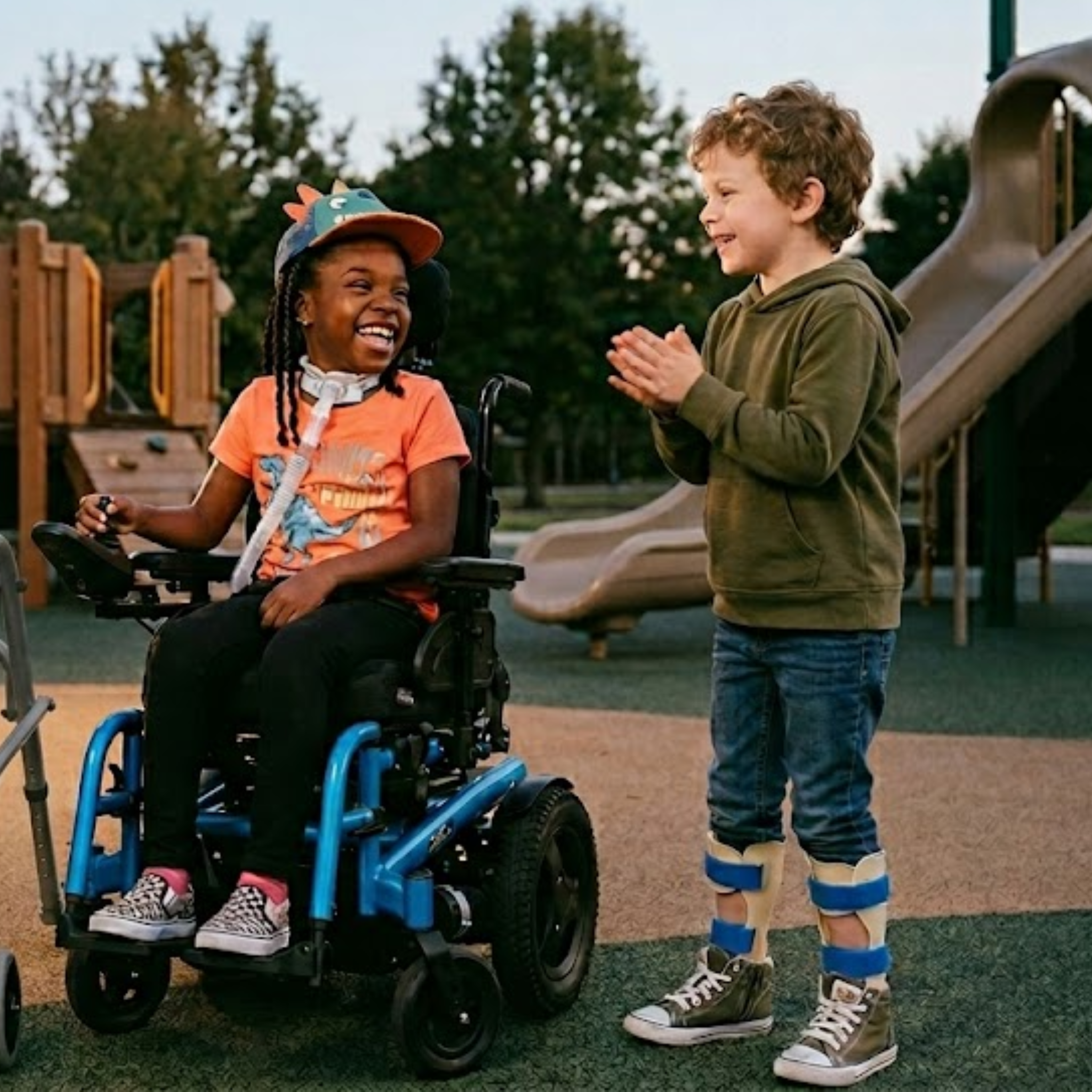
We know that every child’s experience with SMA and its treatments is unique. Our goal is to capture the full range of communication abilities, from verbal speech to Augmentative and Alternative Communication (AAC). We are seeking to better understand each child’s individual strengths, challenges, and communication ability profile.
Participation
We are recruiting children who have a medical diagnosis of SMA, have received an FDA-approved disease-modifying therapy, speak English, and are between 2 and 17 years of age.
Participation will include:
- A 30-minute phone or Zoom interview with a study team member to answer questions about your child’s development and current communication.
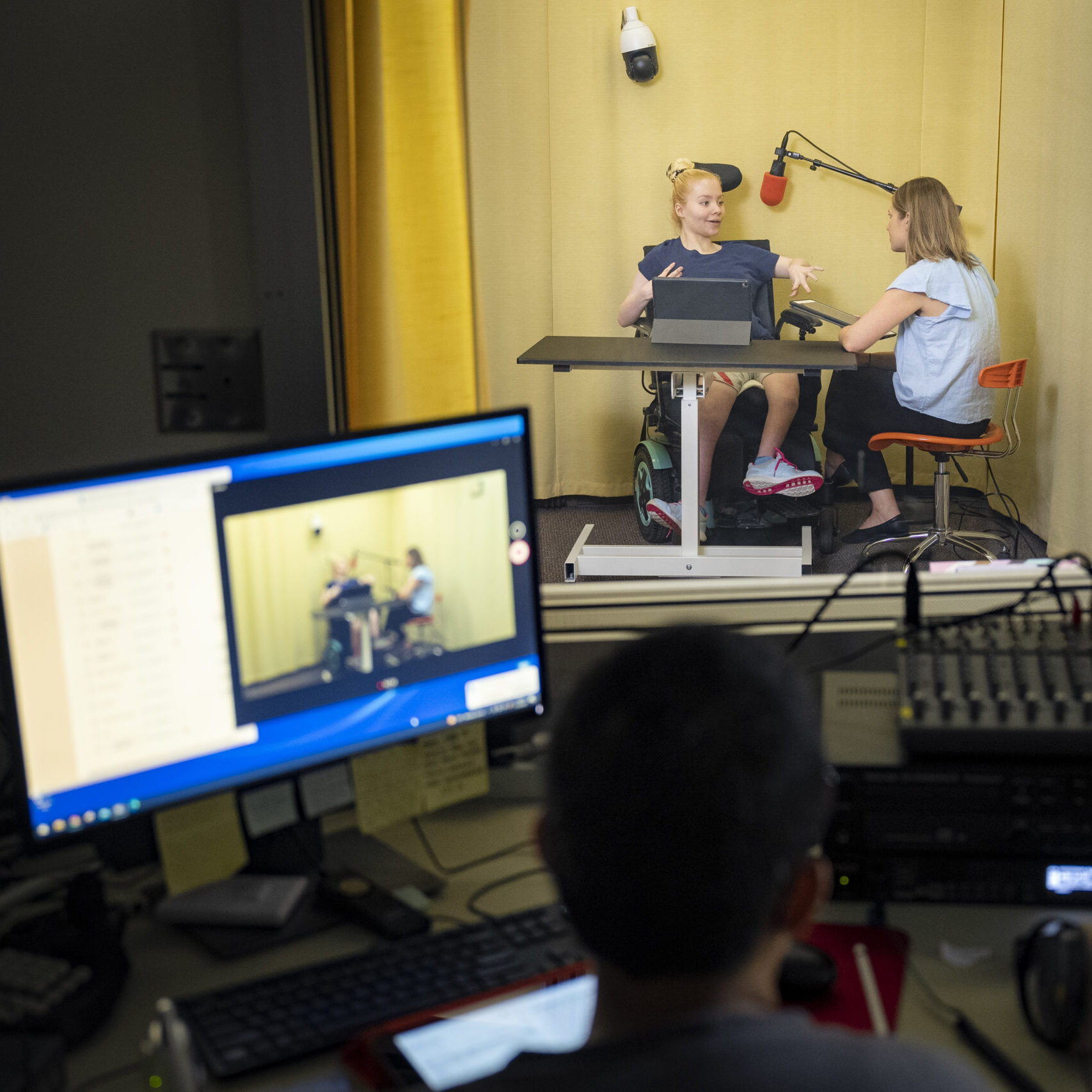
- An in-person visit to the Waisman Center with a licensed Speech-Language Pathologist.
- An online questionnaire about your child’s development.
Consent will be requested to access your child’s medical records for information relevant to your child’s SMA diagnosis and disease modifying therapy administration.

Thanks to new therapies, children with SMA are living transformed lives. By enrolling in this study, you are helping us examine speech development in SMA after disease-modifying therapies for the very first time. This will make a real difference for other children, families, and healthcare providers.
(FAQ) Frequently Asked Questions
Children who have a medical diagnosis of SMA, have received an FDA-approved disease-modifying therapy, speak English, and are between 2 and 17 years of age are eligible to participate in this study.
You will be asked to complete the following to participate in the study:
- A 30-minute phone or Zoom interview with a study team member to answer questions about your child’s development and current communication.
- An in-person visit at the Waisman Center with a licensed Speech-Language Pathologist.
Activities include:
- Play with a caregiver or parent
- Repeating words and sentences
- A hearing screening
- Standardized speech and language assessments
- A short online questionnaire about your child’s development
Consent will be requested to access your child’s medical records for critical information including SMA diagnosis and type, disease modifying therapy received and administration date, and results from their earliest and most recent physical abilities assessment.
Families traveling more than 30 miles will receive a travel honorarium. Hotel accommodations are also available. Please contact the study team to coordinate your trip to Madison!
Yes! Families with receive $50 for participating in the study and your child will be able to select a small toy (valued $15 or less).
You will also receive a brief clinical summary of your child’s performance on all standardized assessments after the session. If your child scores below age-level on any of our assessments, you will also receive recommendations and referral sources.
We schedule as many breaks as needed and can split the visit into two shorter sessions if preferred.
Yes. Our testing rooms are fully wheelchair accessible, and we routinely accommodate medical equipment and extra caregivers in our testing space.
Email spark@waisman.wisc.edu or call (608) 263-5822. We’re happy to talk through your questions.
Yes! Please contact the study team to coordinate sibling scheduling.
Yes! We want to understand the full range of communication outcomes among children with SMA who have received FDA-approved therapy, that includes children with typically developing speech and language development.
Absolutely! We know that children with SMA communicate many ways including AAC, gestures, or body language. We are interested in capturing every child’s unique ability profile in our study!
All information is confidential and stored securely following University of Wisconsin–Madison and federal research regulations. Only members of the study team will have access to your child’s information.
This study is approved by the UW-Madison Institutional Review Board (IRB #2018-0580).
To learn more about what this means and how research participants are protected, watch this short video.
You can also contact the study team directly:
📧 spark@waisman.wisc.edu
📞 (608) 263-5822
Researchers
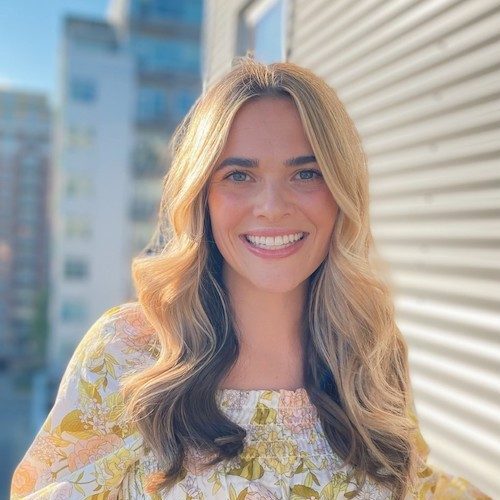
Sydney Jensen
Speech-Language Pathologist & Doctoral Candidate, UW-Madison
Sydney first began working with children with SMA as a speech-language pathologist at the Communication Aids and Systems Clinic at the Waisman Center, where she supported families in obtaining and implementing augmentative and alternative communication devices. Currently, Sydney collaborates with the Pediatric Neuromuscular Disorders Clinic at American Family Children’s Hospital and has witnessed firsthand the remarkable advances in SMA treatment and care that are redefining communication abilities in children with SMA. This study is Sydney’s dissertation project, and she will lead all study visits. She is excited to meet you and your family!
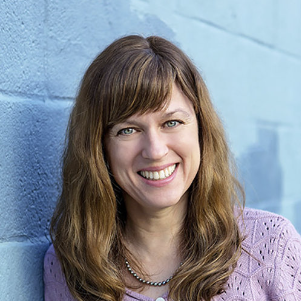
Dr. Katherine Hustad
Principal Investigator, Waisman Center & Professor, UW-Madison
Katherine Hustad is a professor in the Department of Communication Sciences and Disorders at the University of Wisconsin–Madison and director of the Wisconsin Intelligibility, Speech, and Communication (WISC) Lab. She studies communication development in children with neuromotor speech disorders, with a focus on children who have cerebral palsy. Dr. Hustad is Sydney’s PhD mentor and supervises the project.
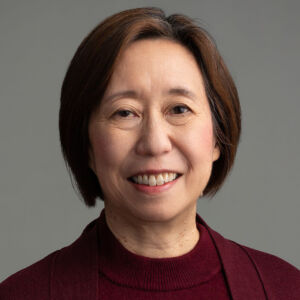
Dr. Jennifer Kwon
Pediatric Neurologist & Director, Neuromuscular Program, American Family Children’s Hospital; Professor, UW–Madison School of Medicine and Public Health
Jennifer Kwon is a pediatric neurologist and director of the Pediatric Neuromuscular Disorders Clinic at American Family Children’s Hospital. Dr. Kwon is a consultant on this project, sharing her expertise on SMA and disease-modifying therapies and assisting with study recruitment.